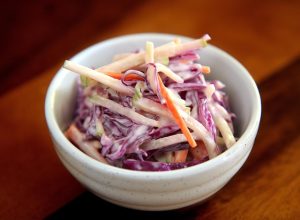
One of the most popular Irish traditions on Saint Patty’s day is to eat corned beef and cabbage. While this delicious duo is hard to beat, we must note that cabbage is much more than just a side dish. For example, cabbage is often fermented. Fermented cabbage, in forms such as kimchi or sauerkraut, is a great source of both prebiotics and probiotics.
What is fermentation?
The breakdown of sugar in food by bacteria or yeast. It helps to preserve the food. Cabbage, like many other fruits and vegetables, contains bacteria on its surface. One of these bacteria is a probiotic called lactobacillus.
Probiotics
Probiotics are living bacteria that exist in our gut. They help with digestion. When cabbage is fermented, the lactobacillus grows and protects our gut from more harmful bacteria. Other sources of probiotics include kefir, sourdough, and tempeh.
Prebiotics
Prebiotics are non-living fibers that fuel probiotics. Raw cabbage is a natural source of these fibers. Other sources of prebiotics include foods such as garlic, onion, and wheat bran. Prebiotics are needed in the fermentation process.
Information gathered & adapted from:
https://www.todaysdietitian.com/newarchives/1118p12.shtml
Sauerkraut
Buy an extra head of cabbage this Saint Patty’s day and try making homemade sauerkraut.
Serving size: 12
Ingredients
2 ½ pounds of raw green Cabbage, shredded
1 ½ tablespoons of kosher salt
1/2 tablespoon of juniper berries
1 teaspoon caraway seeds
2 cups of water in a sanitized glass jar
Preparation
1. In large bowl, mix cabbage thoroughly with salt, juniper berries, and caraway seeds with tongs. Let stand for 10 minutes.
2. Pack cabbage mixture down into a large Tupperware container. Top with a lid smaller than the opening of the container and place a glass jar filled with the quart of water on top of the lid. Place in cool area overnight (65 to 70 degrees F). In a day, the cabbage should have given up enough liquid to be completely submerged. The jar serves as a weight to keep the cabbage submerged and away from air.
3. Check cabbage every other day for approximately 2 weeks and skim the surface of residue, if necessary. Let stand for 4 weeks.
4. Transfer to an airtight container and store in the refrigerator for up to 6 months.
5. Enjoy your homemade sauerkraut in a Reuben, on toast, or on a salad.
Serving Size: 1/2 cup of sauerkraut
Nutrition Information per Serving:
less than 1 gram of total fat; 1 gram protein; 2 grams carbohydrate; 1 gram fiber; 250 milligrams sodium
Recipe adapted from:
Evolution Nutrition